
Merit Award // Rick + Duffy Monahon Award for Design Excellence in Architectural Restoration and Preservation
Architect // Placework
GC // Milestone Engineering & Construction
Civil Engineer // TF Moran
M/P Engineer // Design DayMechanicals, Inc.
Electrical Engineer // Electrical Systems Engineering
Structural Engineer // Thornton Tomasetti
Landscape Architect // Stimson
Description
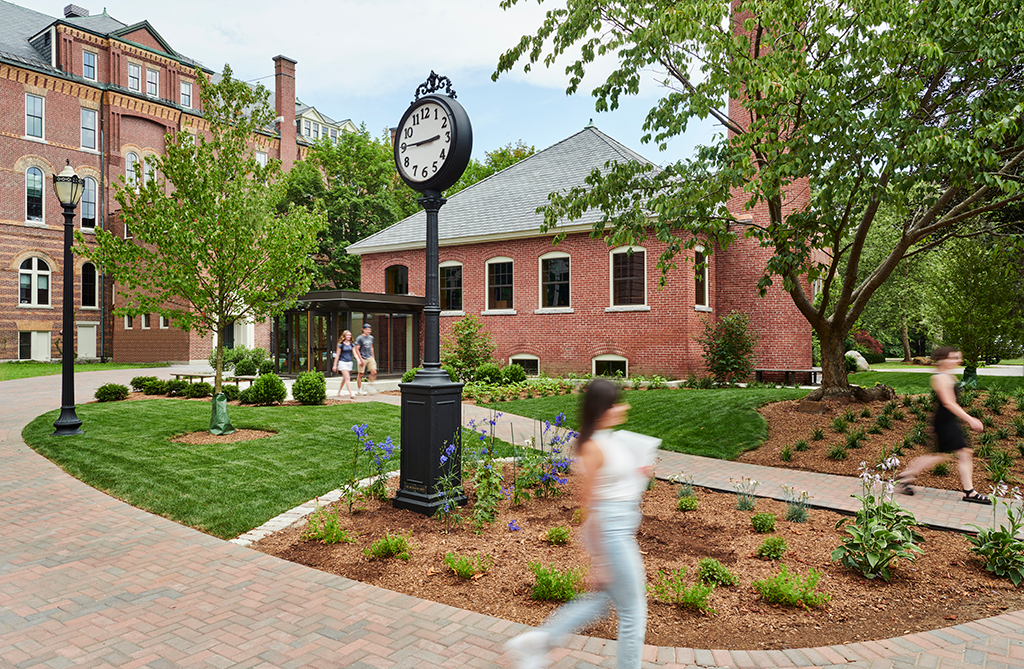
A former campus central heating plant has recently reopened as the new home of the Gregory J. Grappone Humanities Institute at Saint Anselm College. The building invigorates a previously overlooked area of campus between the college’s original building and its new welcome center. The adaptive reuse preserved a historic building, reducing resources and carbon impact while highlighting the important role of the humanities in campus life.
The design transformed the elevated primary level and cavernous basement below into accessible, flexible classrooms and common space. The design highlights the beauty of the 1920s-era brick building while creating an energy-efficient hub for student engagement. The geometry of the building is “peeled away” on a diagonal to expose how the building meets the ground, and the slight off-kilter geometry forms the basis of the new performance area the south side of the building. The original smokestack is preserved as a landmark feature.
Jury Comments
The jury notes the superior preservation and renewal aspects of this project: the conversion of an existing historic structure (a central boiler plant for the campus) to new, academic and inhabited purpose, through the provision of all new interiors and a new exterior vestibule. The submission was well-presented by good photography from within a confined interior, and an important section drawing, well-drawn with care. A new internal stair activates the section and indeed, the internal spatial character overall; the stair is noteworthy in its detailing – a fine handrail combining steel structure with crafted wood to the touch. The insertion of new wood-framed windows (head, sills, jambs) is compelling in their seeming plainness and precision, as are the new ceilings. Altogether, the relationship of new wood to older brick has been understood thoroughly, and accomplished with respect, subtlety, and elegance. Although there is only the evidence of the photographs, the impact of this preservation, conversion, and renewal on campus academic life is visible.
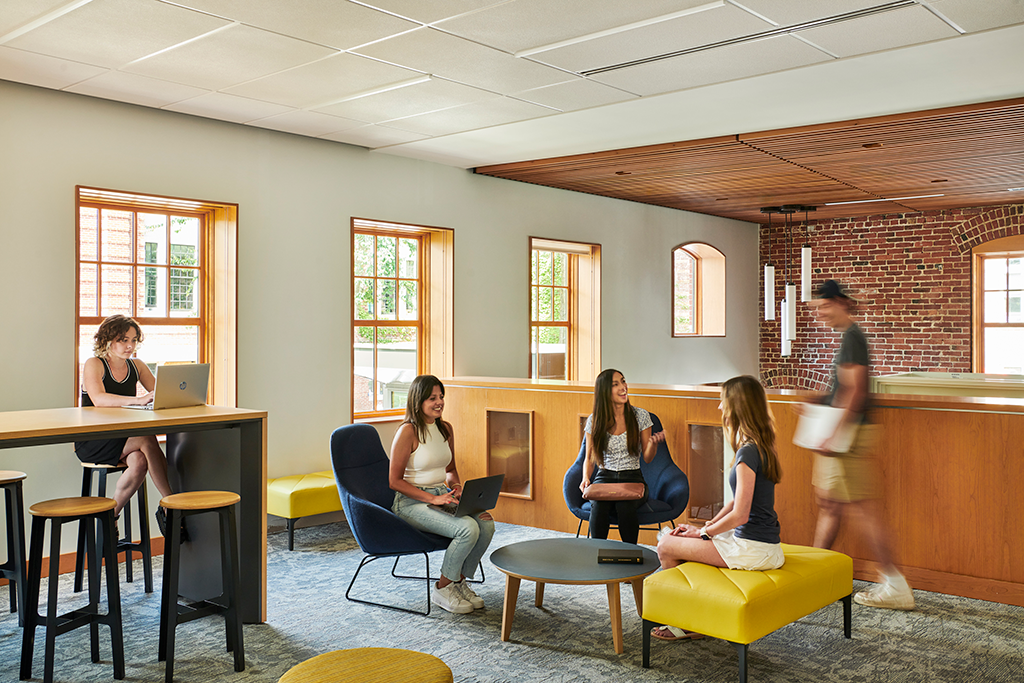
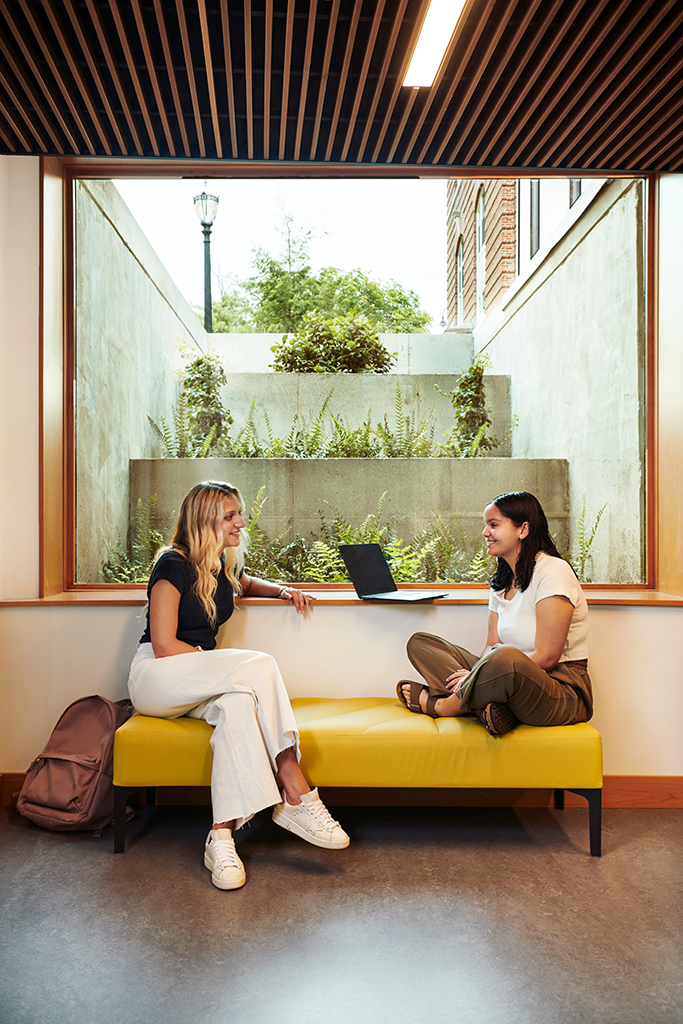
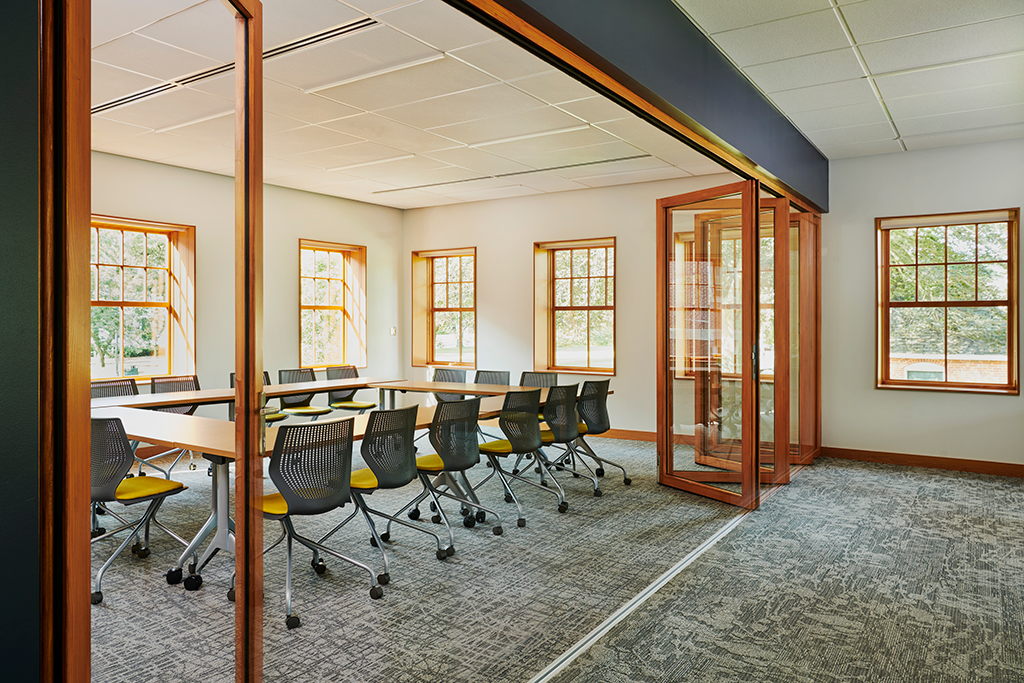
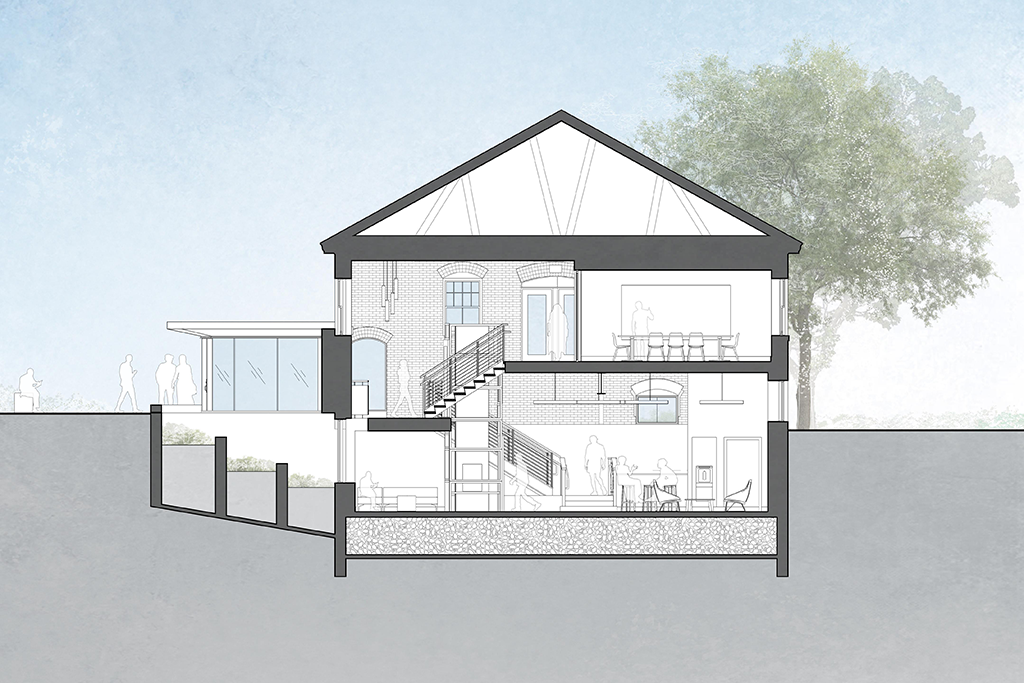
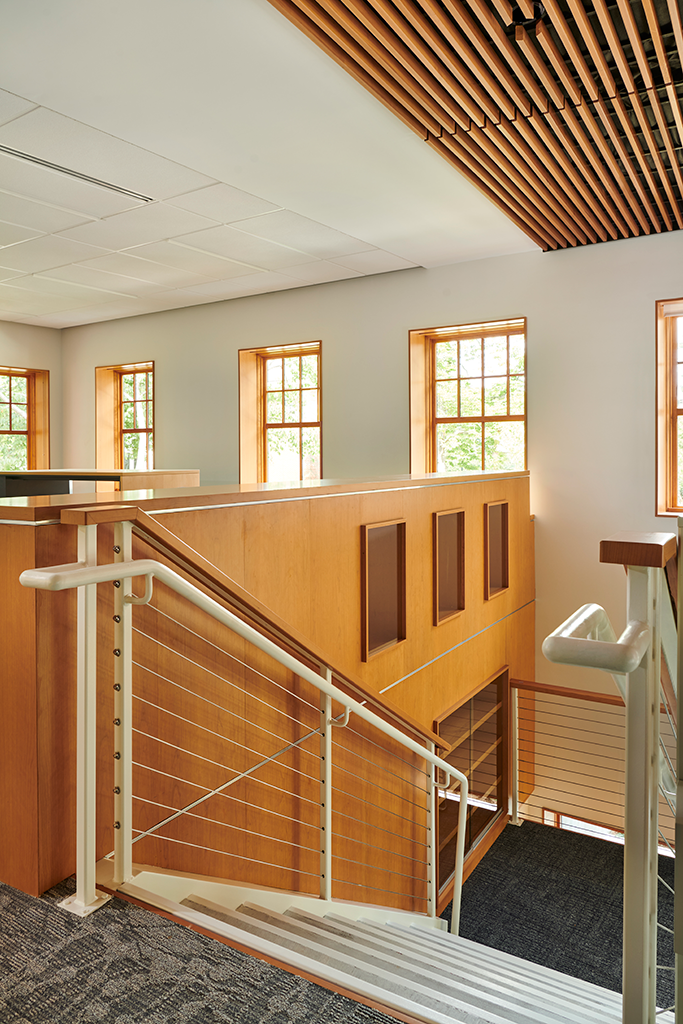
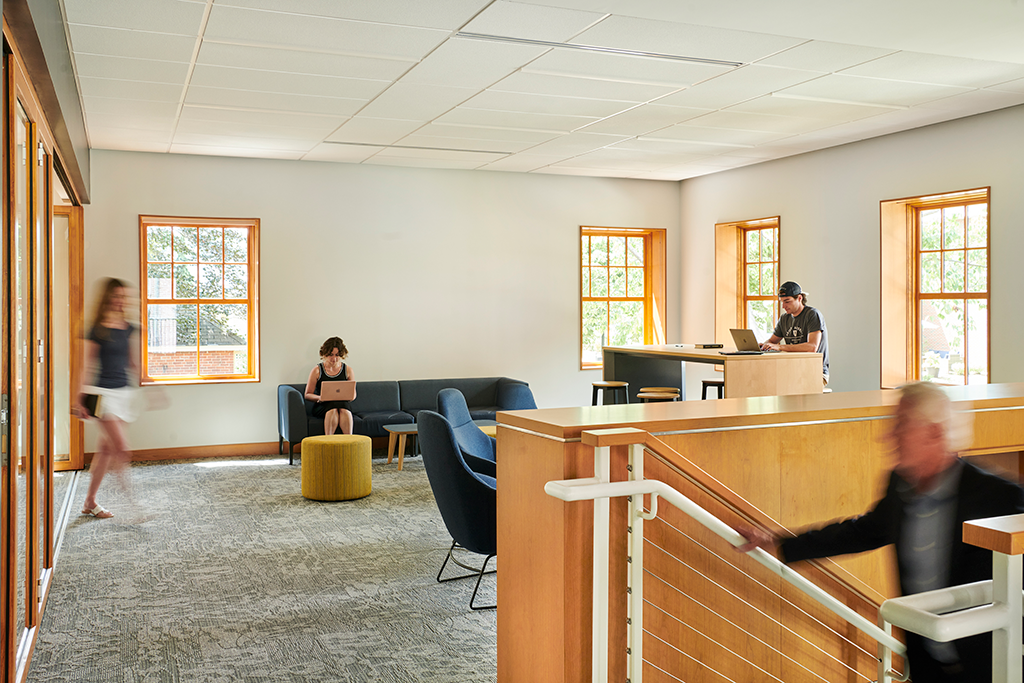
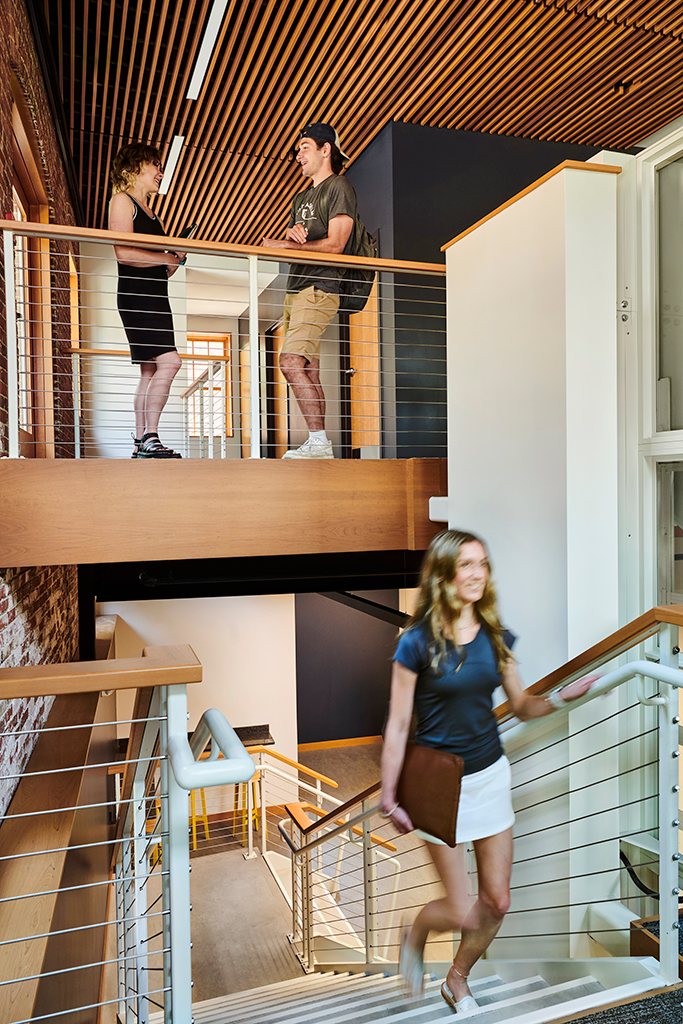
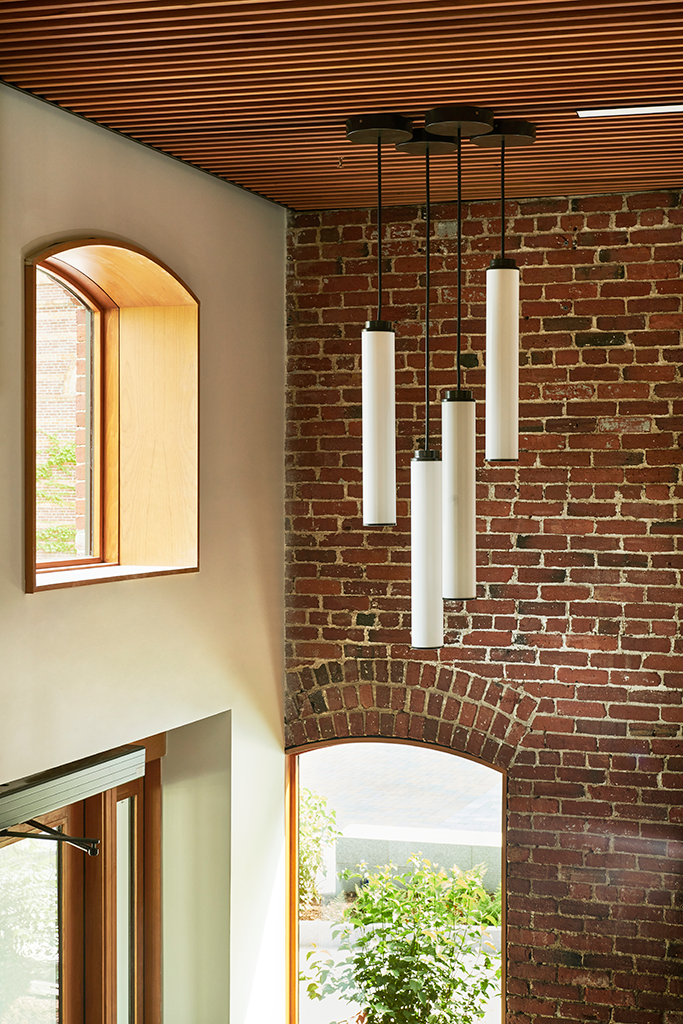
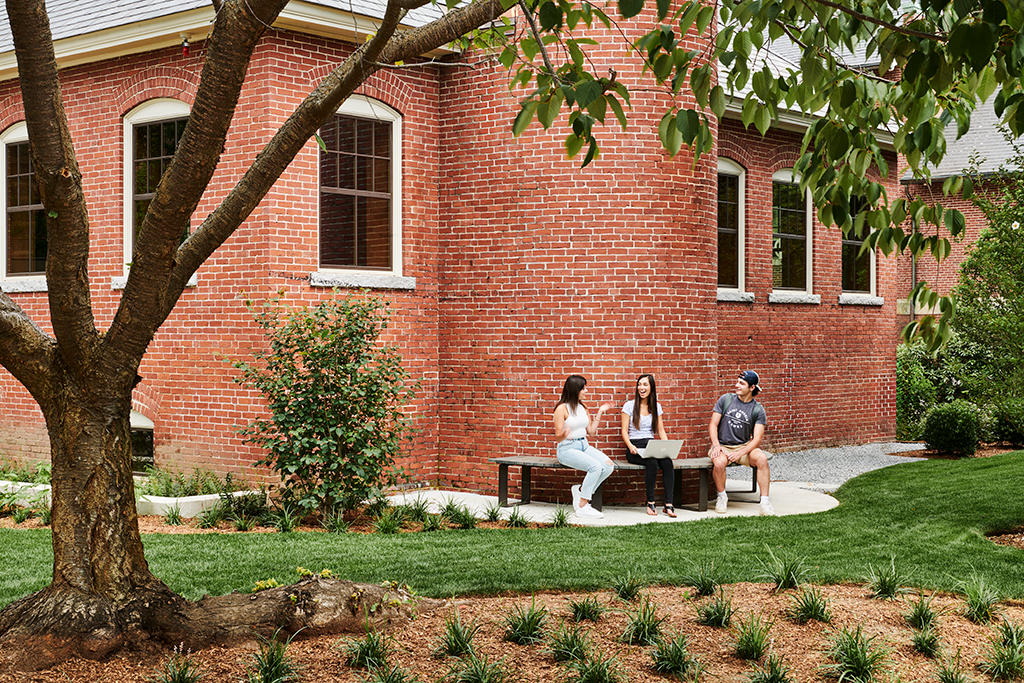
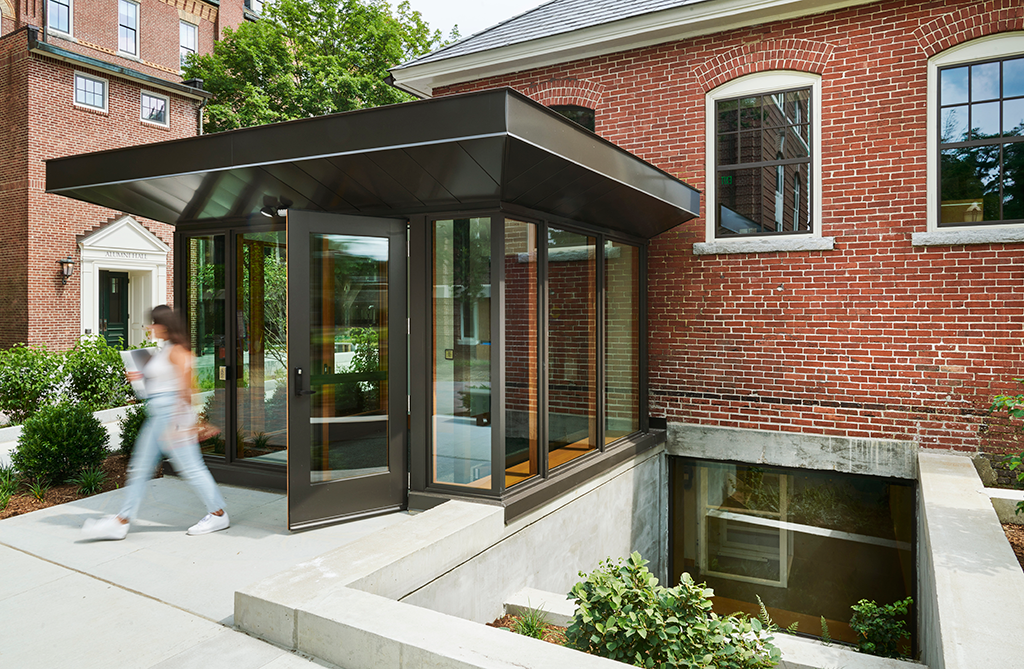
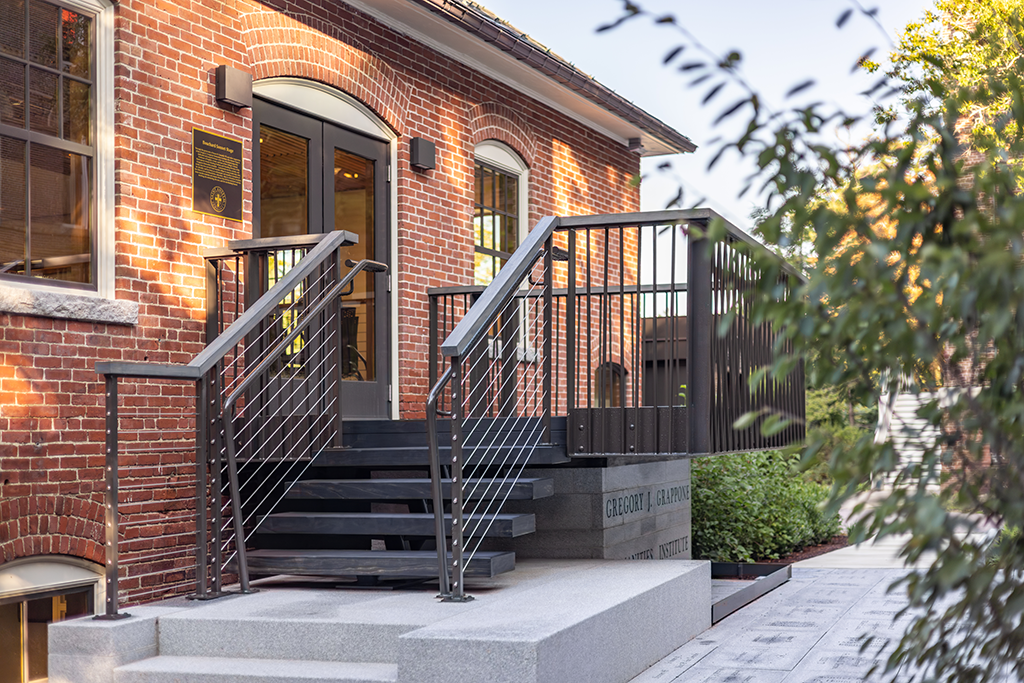
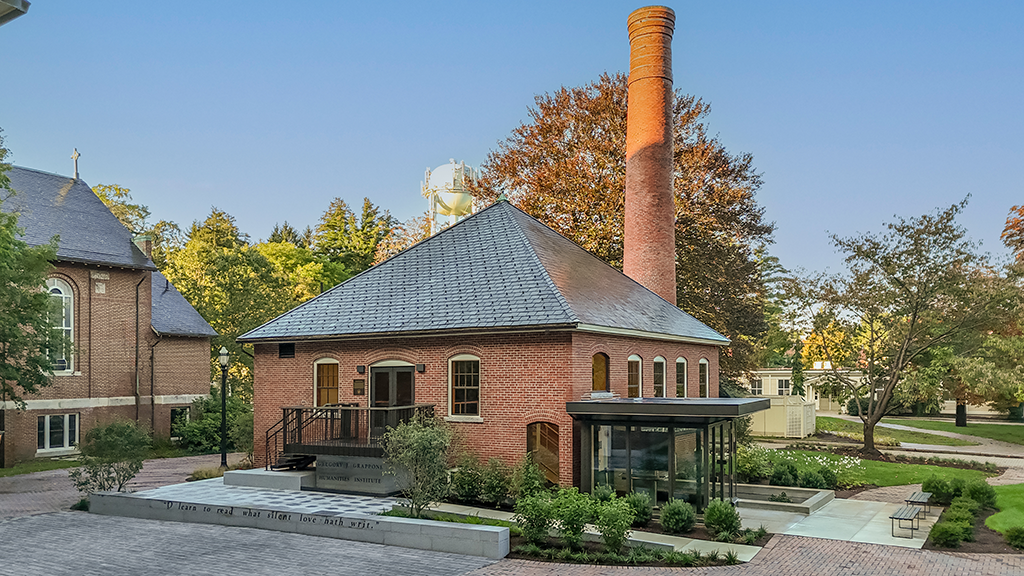
Photo credit: Sykes and MacAskill